
Distinguishing the Aedes aegypti mosquito, the main vector of the dengue virus, from other species is crucial to preventing the spread of this disease. Therefore, it is essential to inform ourselves correctly.
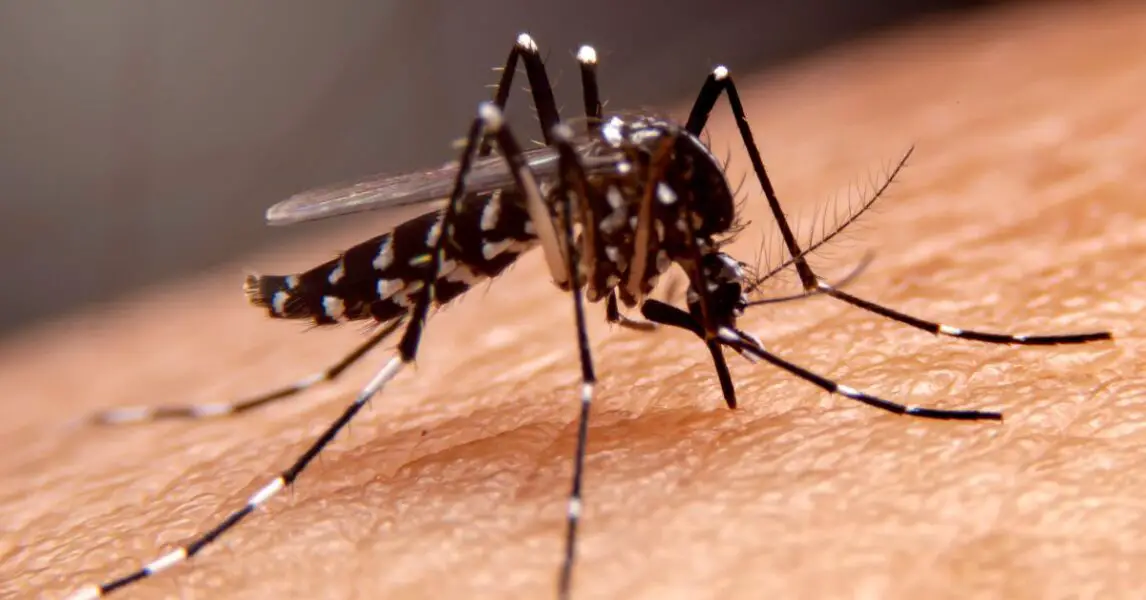
Learning to identify its distinctive features can help you take appropriate preventive measures and seek early medical treatment in case of suspected dengue infection.
Here we will explore some keys to differentiate the dengue mosquito from other common species, thus providing a valuable tool in the fight against this vector-borne disease.
According to Dr. Raquel Gleiser, who is a researcher at the Multidisciplinary Institute of Plant Biology of Conicet and the National University of Córdoba, in dialogue with Infobae, she pointed out the following:
“There are some distinctions between these two mosquitoes in terms of their bites. First, Aedes aegypti tends to bite during the day…”
Another interesting fact:
“Aedes aegypti tends to bite mainly on the lower parts of the body, near the ankles. Their bites are brief and inconspicuous.
It usually draws small amounts of blood each time, and they often go unnoticed until the mosquito moves away. Afterwards, we experienced an itching sensation,” he added.
“In contrast, Aedes albifasciatus is most active around sunrise and sunset. Its bite is more persistent and vigorous. They usually feed until they are completely satiated and are not easily frightened. They are more susceptible to being eliminated with a simple blow of the hand,” explained Dr. Gleiser.
OTHER DIFFERENCES:
A key difference is that the main reservoir of the dengue virus is humans. Therefore, Aedes aegypti mosquitoes become infected when they feed on a previously infected person.
Subsequently, these mosquitoes can transmit the virus to other individuals by biting them.
In contrast, in the case of the equine encephalomyelitis virus, the primary reservoirs are birds and rodents in Argentina.
Both humans and susceptible domestic animals can contract the infection by being bitten by the infected Aedes albifasciatus mosquito and developing the disease.
However, infected people do not transmit the encephalomyelitis virus to mosquitoes. This species is considered a “flood mosquito”, because larvae develop in puddles or bodies of water that are formed by rain.
Although Aedes albifasciatus has the ability to transmit the encephalomyelitis virus, it is important to note that the frequency of transmission to humans is lower than that of dengue.
This species resides primarily in wild natural environments, typically throughout Argentina’s humid Pampas region, and tends to bite a variety of animals, such as cattle. It is therefore adapted to penetrate the thickest skins of animals.
It is vital to take the necessary prevention measures to avoid the consequences of receiving these bites!