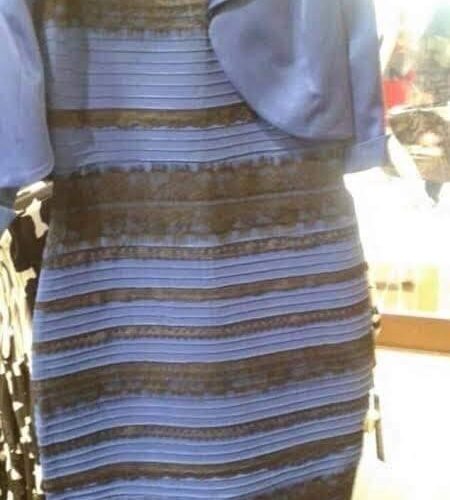
If you’ve been on the internet in the last few years, you’ve probably seen the infamous “dress debate” that took the world by storm. The question that had everyone talking: What color is this dress? Is it white and gold, as some people swear, or blue and black, as others insist? The image went viral, sparking thousands of debates and discussions across social media platforms, news outlets, and even science labs. But what really is the true color of the famous dress?
The Dress That Broke the Internet
The dress in question first appeared in a photo posted to the internet in 2015. Immediately, people became divided into two distinct groups—those who saw it as white and gold, and those who saw it as blue and black. The image was so polarizing that it sparked one of the biggest viral debates in internet history. But how could such a simple photo create so much controversy?
The Science Behind the Color Debate
The key to understanding this phenomenon lies in how our brains interpret color. The dress, as it turns out, is actually blue and black. However, due to the lighting in the photo and the way our brains process visual information, different people perceive the colors differently.
Here’s why:
- Lighting and Exposure: The photo was taken in natural lighting, and depending on the exposure settings, the image has a certain color temperature that can affect how we see the dress. Some viewers interpreted the light as having a yellowish tint, causing them to perceive the dress as white and gold. Others interpreted it as having a cooler tone, which led them to see it as blue and black.
- Optical Illusion: The debate is also related to how our brains adjust the image’s lighting and interpret shadows. The brain can automatically try to “correct” the color of the dress based on the surrounding light, leading to two completely different interpretations of the same image.
- Individual Differences: Factors such as individual sensitivity to color and lighting, the type of screen being used to view the image, and even cultural influences all contribute to how a person perceives the dress. Some people’s brains may be more prone to seeing one set of colors, while others may see something entirely different.
The Truth: The Dress Is Blue and Black
Despite the overwhelming debate, the real color of the dress was confirmed by the retailer who made it. The dress, designed by Roman Originals, was indeed blue and black. The photo, however, had been taken in such a way that it confused many viewers’ brains into perceiving it differently, creating the illusion of white and gold.
Why Does It Matter?
The dress debate, while seemingly trivial, actually reveals some fascinating things about human perception and how our brains process visual information. It highlights how subjective our perception of reality can be. The way we see the world isn’t always an accurate reflection of the truth—our brains are constantly interpreting and adjusting visual data based on various factors like lighting, context, and experience.
This optical illusion also demonstrates that the same stimulus can be perceived in different ways by different people, based on their neurological makeup and personal experiences. It’s a reminder that our perceptions can be incredibly unique and shaped by various factors.
Conclusion: The Power of Perception
So, the next time you encounter a question about color or perception, remember the great “dress debate” of 2015. It’s a fascinating reminder of how our brains work and how our perceptions can vary greatly, even when looking at the same thing.
If you found this explanation interesting or if it sparked some memories of the famous dress debate, don’t forget to share it with your friends! Like and comment to keep the conversation going—what do you see when you look at the dress? White and gold? Blue and black? Let’s hear your thoughts and spread the knowledge!