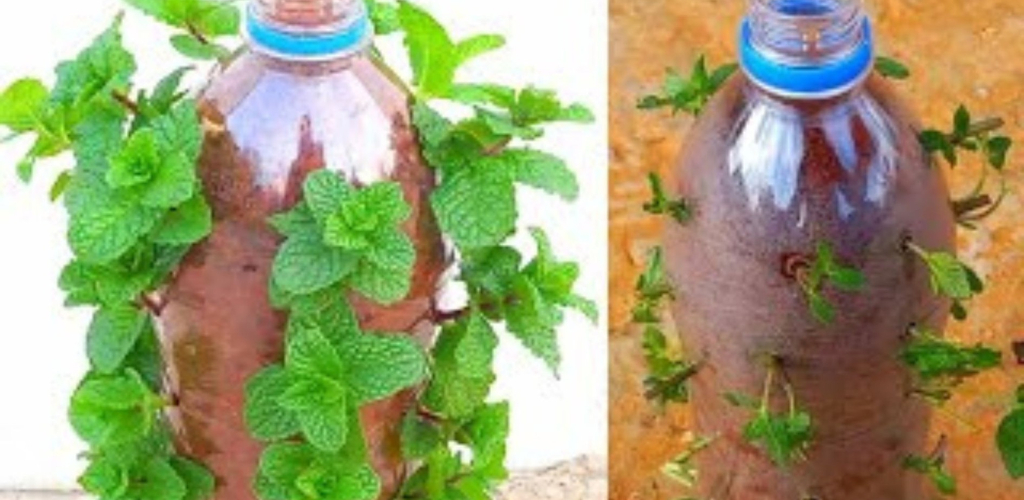
Mint is a perennial herbaceous plant that dies in late fall but comes back to life in spring. The vigorous nature of mint makes it a relatively easy plant to grow. However, it is also a very invasive plant that will spread almost anywhere if you give it too much freedom.
Mint sends out lateral twigs below the ground that allow it to re-emerge in another part of your garden while competing with your other plants for water, nutrients and light.
In this article, we’ll look at how to grow mint successfully without letting it take over your garden.
Garden preparation:
The ability to take over entire garden space is usually overcome by growing mint in containers or taking steps to prevent root spread.
Growing mint in containers
If you want to grow your mint directly in the soil instead of in a container on the patio or deck, use the following trick to limit mint growth. Use a large plastic pot (at least 30cm deep) with the bottom trimmed to allow the roots to grow downward, but not to the side.
Dig a hole in the garden where you want to place the mint and place the bottomless container in that hole. Leave about 2 cm of the container above the ground. The pot will act as an obstacle to the lateral spread of the mint roots and will therefore keep the whole in a well-defined part.
You can also use bricks/pots/stones to form small barrier walls below the soil between the mint and the rest of your vegetable garden. However, be careful that if there are cracks in such a wall, mint roots will quickly find space through the cracks!
Growing mint from seeds:
Mint can be grown from seeds, although growing from seeds is not always successful. Because mint is so easy to propagate from cuttings, it is often the number one choice of gardeners.
If you grow seeds in 7cm pots and cover with a 1/2cm layer of fine compost. Water the compost and place a clear plastic bag upside down over the pot to help retain moisture. Secure the plastic bag with a rubber band.
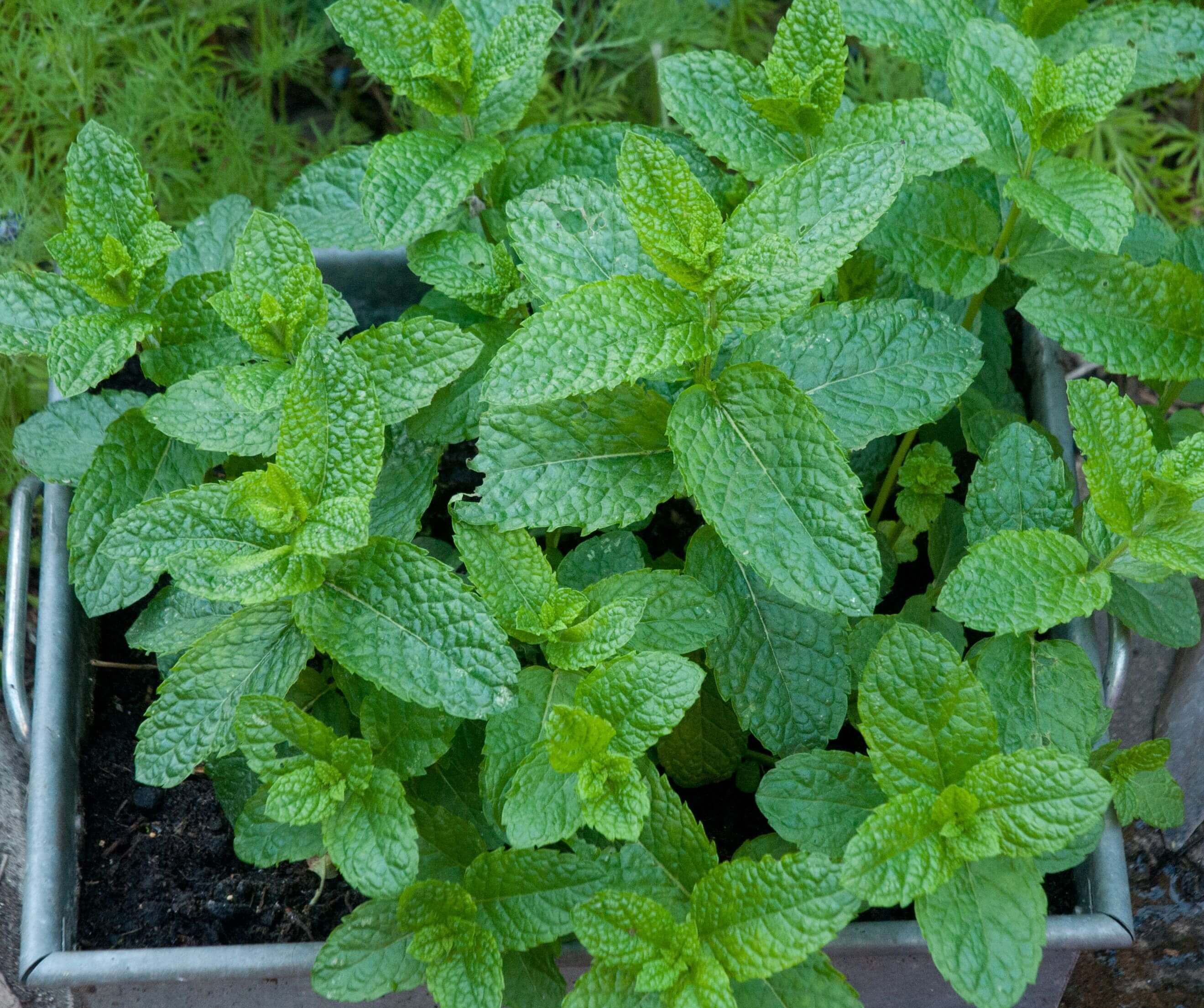
Obtain new mint plants from cuttings:
If growing from cuttings, it is essential to inspect the plant from which you wish to take cuttings before doing so. If the plant shows any sign of being affected by a pest or disease, do not use this plant for propagation.
Use a sharp knife or scissors to cut just below a leaf node (where the leaves emerge from the stem).
The cutting should be approximately 8 to 10 cm long.
Remove the leaves from the bottom half of the cutting.
Cut the top of the cutting. Be sure to handle the cutting carefully, without crushing its main stem in any way.
You can now choose to place the cutting in water or compost.
– Rooting your cutting in a glass of water can be a lot of fun if your kids are involved because they can see the roots forming in the water. Just make sure at least the bottom half of the cuttings are submerged in water, after about a week you will see roots begin to form. Wait another week or so, then transplant the cuttings into the containers. During this time, be sure to top off the water level as needed.
You can alternatively put the cuttings in small pots and then transplant them into larger pots.
For larger containers, simply fill the container with compost, make a hole in the compost up to half the cutting length. Place the bottom half of the cutting into the hole. Use a pencil to pack the compost around the cutting, taking care not to crush the stem.
Mint doesn’t like to dry out, so it’s essential to keep the compost moist while your cuttings get established. When your cutting is in pots you can help retain moisture by using a clear plastic bag over the pot as described when planting from seed.
Where to plant mint:
Mint will thrive in a sunny position, but will also tolerate a certain amount of shade.
Growing More Than One Variety of Mint
Although mint coexists well with other varieties of mint, it is generally believed that the flavor and odor qualities of the plants are reduced when mixed. Therefore, if you wish to have different varieties in one large container, plant the varieties in small sub-containers and then place all the containers in the larger container.
The type of soil
Mint likes rich soil, which is fairly well draining, although it does not like the soil to dry out.
Care of mint in pots:
When growing mint in containers, if the root system has filled the pot or container, the plant can be removed from the pot and then divided into 3 or 4 plants, and then each plant can be transplanted to a new pot with the addition of potting soil to fill the container.
Do this in the spring and these plants will grow vigorously in their new container. This will help keep your plant healthy and allow it to expand its root system even if it is in a tight space.
Mint does not like to dry out, so be sure to water regularly, especially if it is in terracotta pots that lose a lot of water through the edges of the pot.
Finally, if you have a plant that is showing signs of peppermint rust, remove it from the garden and destroy it. The disease can easily spread to other plants and the soil also affects future introduced plants.