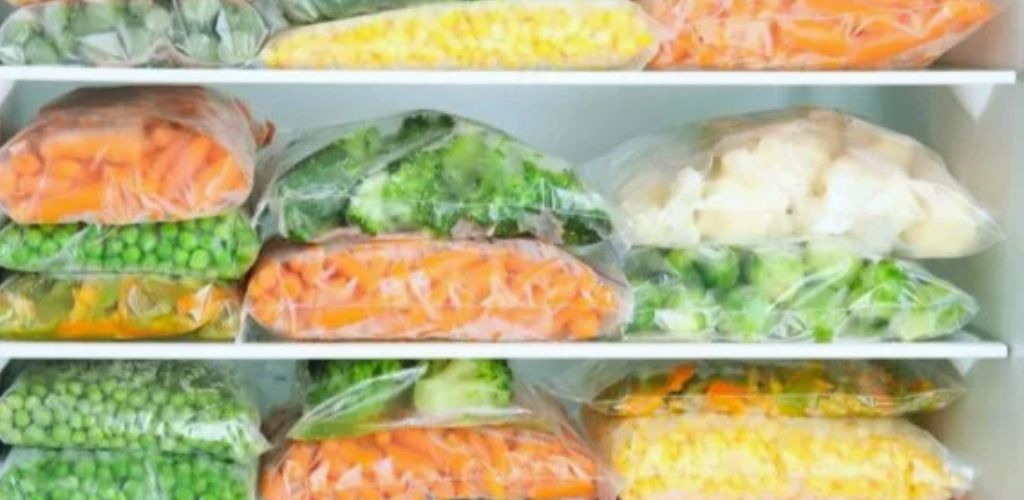
In the frenzy of modern life, more and more people are choosing to buy food in quantity to store it in the freezer and ensure that nothing goes to waste. However, freezing fruit and vegetables requires a specific procedure, different from that of meat, to keep taste and nutrients intact. Here is a detailed guide on how to properly freeze these foods at home.
Freezing Vegetables: Step by Step Procedure
1. Cutting and Chopping:
Every vegetable should be cut and chopped to save space in the freezer. Cutting them into small pieces also makes it easier to divide them into portions. It’s crucial to blanch vegetables to maintain their color and texture while preserving nutrients.
2. Blanch the Vegetables:
After cleaning and cutting, immerse the vegetables in boiling water for 1-3 minutes, depending on the consistency. Then, immediately cool them in cold water to stop the cooking process. This operation must be repeated for each vegetable. Drying vegetables thoroughly before freezing is essential to avoid cold burn damage.
3. Cooking Before Consumption:
When taking a vegetable out of the freezer, it is important to cook it before consuming it to remove the cold accumulated during the freezing process.
4. Packaging:
Vacuum packaging is highly recommended, as it eliminates air and prevents oxidation. Airtight bags are ideal, as are airtight containers, as long as they are clean and dry.
5. Vegetables Suitable for Freezing:
Not all vegetables are suitable for freezing. You can freeze garlic, onion, leek, peppers (seedless), squash, courgettes (seedless), chard, spinach, artichokes, aubergines, cabbage, cabbage, cabbage and carrots. Raw vegetables such as lettuce, tomato, cucumber, celery and potatoes are not recommended for freezing.
Freezing Fruit: Practical Tips
1. Cutting and Preparation:
The fruit must be cut into pieces and immersed in a preparation of water with sugar (40%) and ascorbic acid. This method ensures safe and prolonged storage.
2. Vacuum Freezing:
An expensive but effective alternative is vacuum packaging clean, whole fruits. However, this option requires specific equipment.
3. Natural Storage:
For some fruits, storage in the refrigerator or in their natural state is preferable, regardless of size or season.
Following these instructions carefully will ensure that fruit and vegetables frozen at home keep their freshness intact and are ready to enrich your dishes at any time. Remember to note the freezing date and respect the storage limits to fully enjoy the benefits of this practical food preservation method.