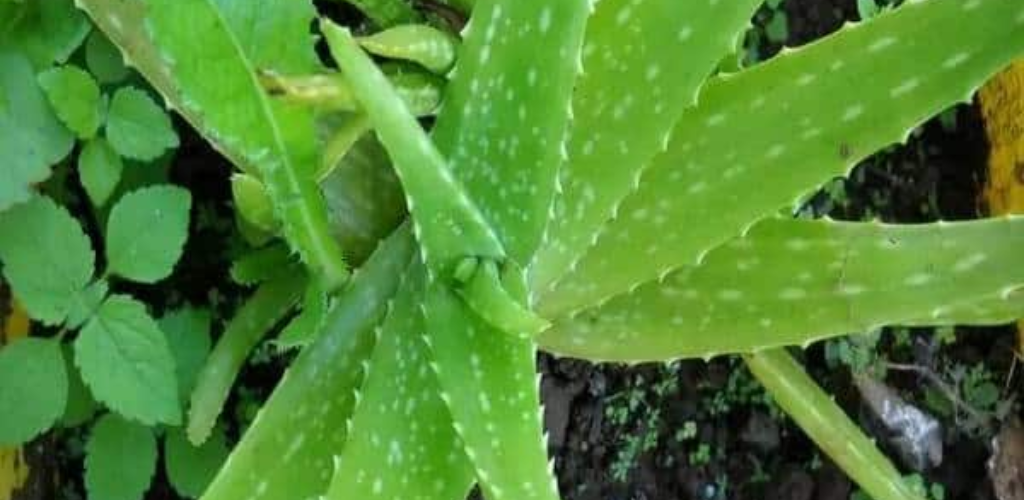
How to grow aloe vera at home. Ideal for calming burns and stings, accelerating the healing of pimples, herpes, scars, treating inflammation of the skin on the face and body, fighting against skin aging, dandruff and hair loss, aloe vera is an extraordinary plant. So why buy it in a pot or tube, and not grow it at home? Find out how to grow aloe vera at home and benefit from its benefits.
1 – WHAT TYPE OF ALOE SHOULD YOU CHOOSE?
You must know that there are more than 200 types of aloe vera plants. Which one to choose in this case? We will give you the list of the most suitable for indoor cultivation:
- Aloe arborescens: it is considered the most important variety of aloe vera, and has the shape of an “octopus”. It grows very quickly, in the shape of a shrub, and can reach 4 meters in total.
Its properties are exceptional, particularly for treating burns, skin problems and accelerating healing. - Aloe saponaria: it has very large, very fleshy leaves, 15 to 20 centimeters wide, with spiny edges. It also treats skin problems, but is also excellent against constipation and inflammation.
It is a very pretty plant, although it is much smaller than aloe arborescens. - Aloe aristata: its central rosette has a diameter of approximately 15 to 30 centimeters, with very fleshy leaves. In addition to having the same benefits as the plants mentioned previously, it is ideal for treating wasp stings or other insects. It is very medicinal and is an excellent choice if you want to put the plant in your interior.
2 – PLANTING OR TRANSPLANTING AN ALOE VERA
Know when to transplant. Aloe vera plants have rather short roots and heavy leaves, so they are usually moved to a heavier pot when their tops become heavy and their ends droop. If aloe vera lacks space for its roots to grow, it may begin to produce small shoots that can be placed in their own pot. If you are more interested in growing adult plants than producing new plants, transplant the aloe vera into a larger pot before it begins to encircle the walls of its container.
- If you want to transplant a young plant that is growing at the base of an older plant, see the section on propagation instead.
3 – THE EARTH
The choice of soil is as important as the climate and the type of water for watering. For aloe, it is advisable to use special soil rich in humus. There must be no organic matter that is not decomposed. You can create the right mix of soil and sand at home to use for your aloe. You need 3 volumes of earth and one volume of sand. Thus the soil becomes draining and prevents water stagnation.
4 – EXHIBITION
Aloe vera fears direct sunlight which causes the plant to dry out, but it still requires light. It is installed near a window which allows light to pass through while avoiding exposure to the sun’s rays.
5-HUMIDITY
Aloe vera likes humid soils. However, when waterlogged, it does not survive long and rots quickly. This is why it is recommended to drill holes in the pots so that the water can drain away. Easy to maintain, it requires very little watering: every two weeks in summer and once a month in winter.
6 – IDEAL TEMPERATURE
The temperature of a house or apartment is ideal because it must be between 18 and 21° all year round.
From May to September, you can take the plant out without any problem but do not hesitate to bring it in in the evening if the nights are cool.
7 – DISEASES AND PESTS OF ALOE
Aloe especially attracts mealybugs. They lodge between the leaves, causing them to turn yellow and then fall. You must then brush each leaf of your aloe with a brush soaked in denatured alcohol.
If the mealybugs attack the root, then wash the roots with lukewarm water and cut off the attacked parts. A liquid insecticide is then applied to healthy roots to prevent future attacks.
8 – WHEN SHOULD IT BE POTTED?
Repot your aloe vera every 2 or 3 years, in a slightly larger pot, but always with holes. Place a drainage layer at the bottom of the pot (gravel, clay balls). Use a special cactus potting mix. If you want to make your own “homemade” potting soil, mix 1/3 garden soil, 1/3 sand, 1/3 horticultural soil. The soil should not be too rich and aloe vera does very well without fertilizer.