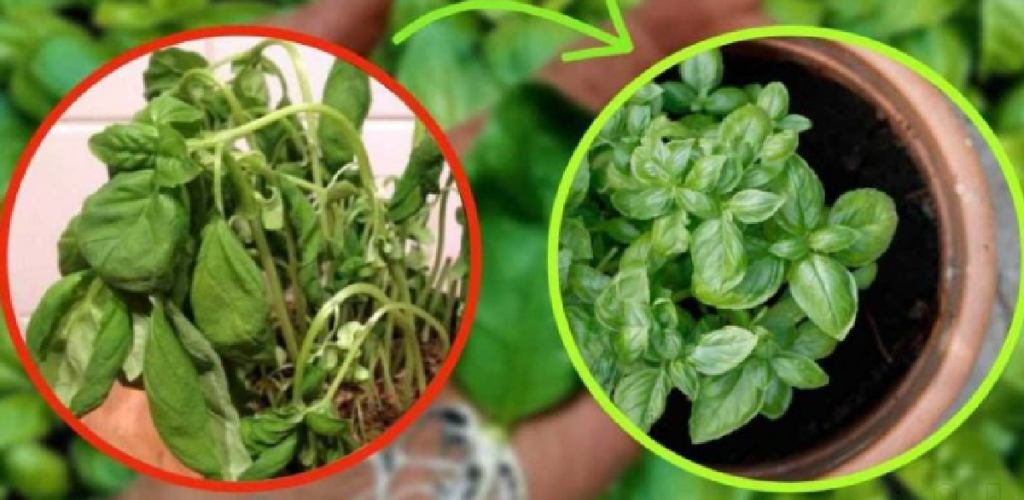
Basil Tip: The secret that no nurseryman will ever tell you!
If your basil doesn’t survive more than 15 days, here’s why, as well as the secret that nurseries will never tell you! At this time of year, supermarkets often offer aromatic plants in small pots, of which basil is the most popular. This fresh and delicate herb is essential in cooking for its incomparable aroma and flavor. Whether you bought it in a pot or grew it yourself, there are simple tips to keep it for much longer.
Announcement
Basil is a very popular aromatic plant in kitchens around the world:
However, if you buy basil plants from the supermarket
hoping to have fresh leaves throughout the season, you may be disappointed.
In fact, these plants generally don’t last more than 15 days
indoors, even if you have transplanted them into a larger pot.
This problem is caused by the fact that each pot contains up to 20 small,
dense plants, which are forced to grow in a small space and in artificial light.
Nurseries thus obtain an “adult” plant in a short time
and with little care, but this results in a reduction in the quantity of nutrients for each plant.
Plants then compete for space and nutrients, which can lead to disease and plant death.
If you want your basil plants to last longer, the solution
is not to transplant them into a larger pot, as most people do.
The best tip is to carefully remove each plant from its original pot and transplant them individually.
This way, each plant will have enough space and nutrients to grow and grow stronger.
This will give you plants that last longer and provide you with fresh basil leaves for your favorite dishes.
These tips are explained by the English botanist
James Wong in his book “Grow to taste”, an interesting work for horticulture and gardening enthusiasts.
To get strong, healthy, lush basil plants, it is important to consider the following:
- Basil needs a lot of light to grow.
It can be grown in a garden, on a terrace or in a bright room in the house.
In hot climates it can be grown in a semi-shaded area to avoid damage from direct
sun exposure during the hottest hours of the day. - Basil is sensitive to wind and cold, so it is important to avoid drafts and protect the plants from too low temperatures.
- The soil for growing basil should be rich in humus and constantly moist.
It is important to keep the soil moist by watering regularly (several times a day with small amounts of water) to prevent
the plant from drying out. It is also essential to facilitate drainage by creating a small hole at the bottom of the pot.
To obtain quality basil seedlings, it is recommended to purchase them in a nursery or specialty store and then transplant them into separate pots at home.
Then, it is important to cultivate them in optimal conditions to ensure their health and growth. By following these tips, you can grow strong, healthy, lush basil plants for your personal use.